What Florida approved
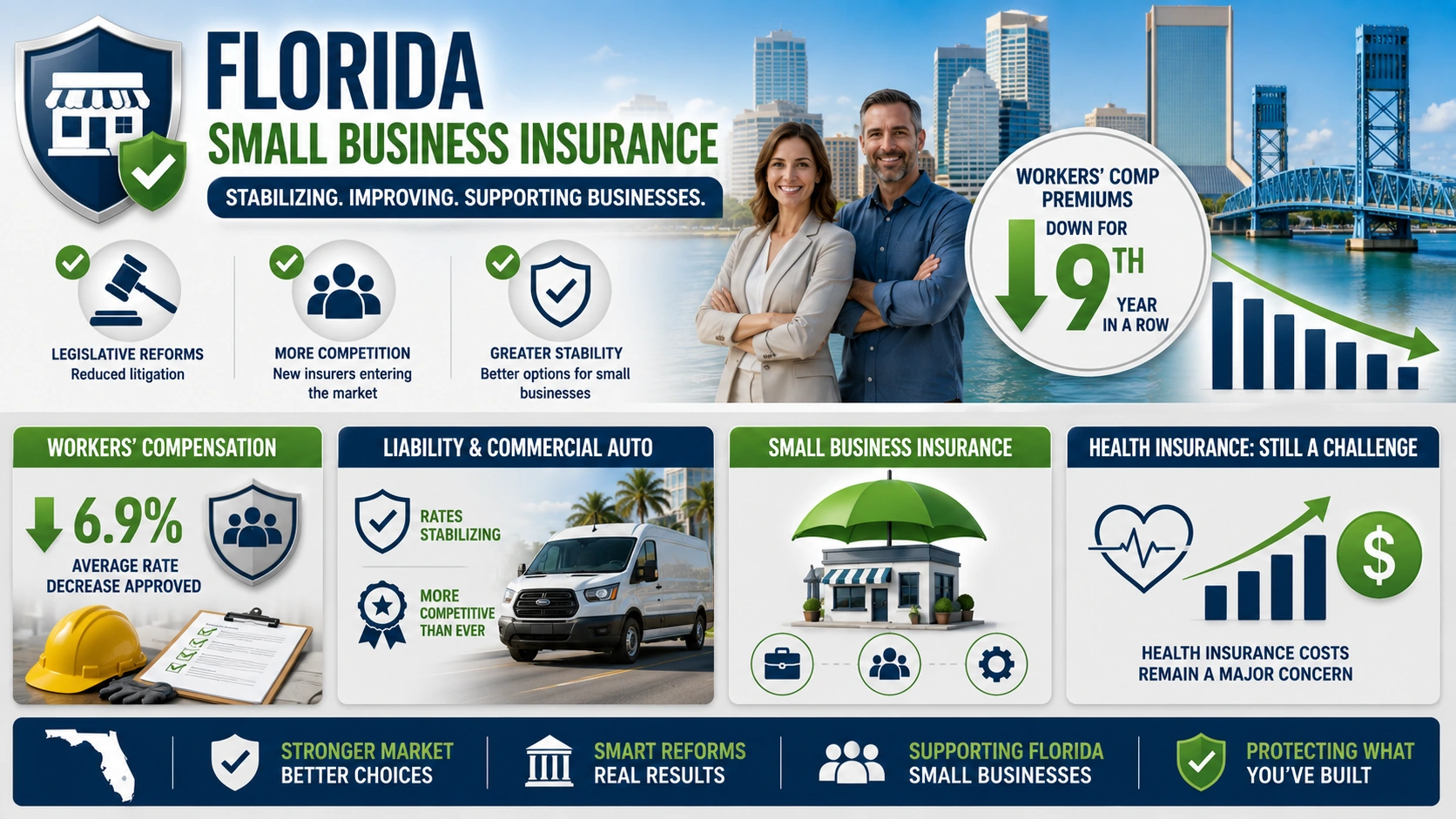
The Florida Office of Insurance Regulation approved a statewide overall workers’ compensation rate decrease of 6.9%, proposed by the National Council on Compensation Insurance. It applies to new and renewal policies effective in Florida beginning January 1, 2026 and marks the ninth consecutive year of decreases.
For small employers, the reduction can help operating costs. It is also the right moment to check whether the policy data—not just the underlying rate—is accurate.
Why an employer may not see a full 6.9% decrease
Workers’ compensation premium is influenced by more than the statewide rate level. A growing payroll, a change in operations, different employee class codes, an experience modification factor, minimum premiums and carrier pricing can offset or exceed the reduction.
“The state cut rates, but my renewal increased.”
Compare the expiring policy and renewal line by line. Check estimated payroll by class code, officer inclusion or exclusion, locations, subcontractor exposure, experience modification and fees. The higher total may come from changed exposure rather than a higher base rate.
The audit surprise many small businesses can prevent
Many workers’ compensation policies begin with estimated payroll and end with an audit. If actual payroll is higher, uninsured subcontractors are treated as employees or workers were assigned to different classifications, the business may owe additional premium.
- Keep payroll records separated by entity and class when permitted.
- Collect valid certificates of insurance from subcontractors before work begins.
- Report material operational changes instead of waiting for audit.
- Review class codes against actual job duties, not job titles alone.
- Prepare for the audit and question discrepancies promptly.
Who needs workers’ compensation insurance in Florida?
Florida requirements vary by industry, employee count and business structure, with special rules in construction and agriculture. Owners should not rely on a competitor’s policy arrangement or a generic online answer. Confirm the current requirement for the specific business.
Belkys helps employers coordinate workers’ compensation with their broader Florida business insurance program, reducing the chance that payroll, commercial auto and liability information conflict across policies. The agency also compares available carrier options and explains requirements in English or Spanish, giving owners both market access and a clear local point of contact.
Common employer objections
“My workers are independent contractors, so I have no exposure.”
A label or 1099 alone may not settle worker status for every purpose, and uninsured subcontractors can create audit exposure. Obtain professional guidance and current certificates.
“The least expensive estimate is the best quote.”
An artificially low payroll estimate can produce a large audit bill later. Accuracy and correct classifications make the comparison more reliable.
Official source
This article is general information, not legal or payroll advice. Workers’ compensation requirements and premiums depend on the specific employer.