The short answer
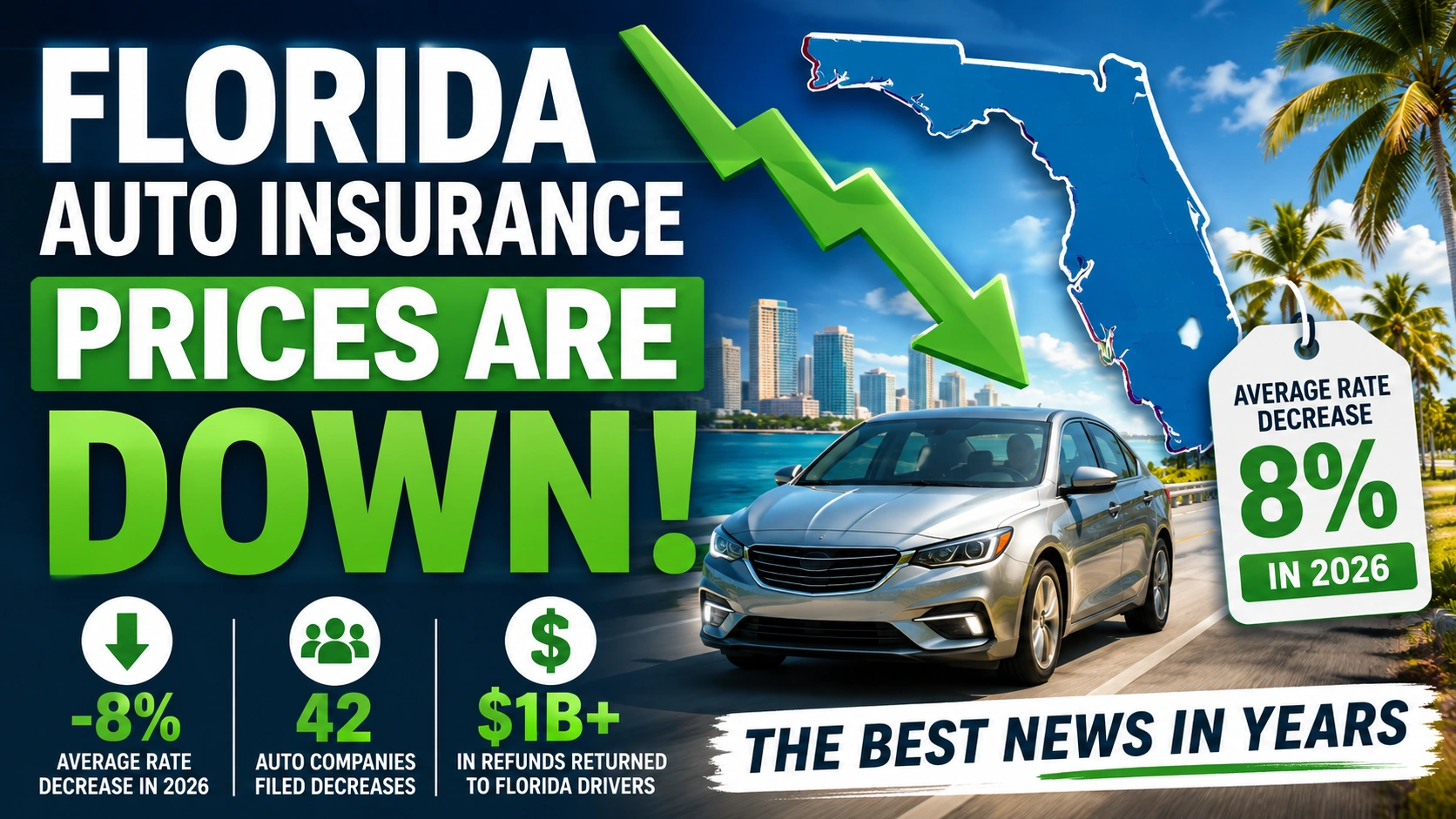
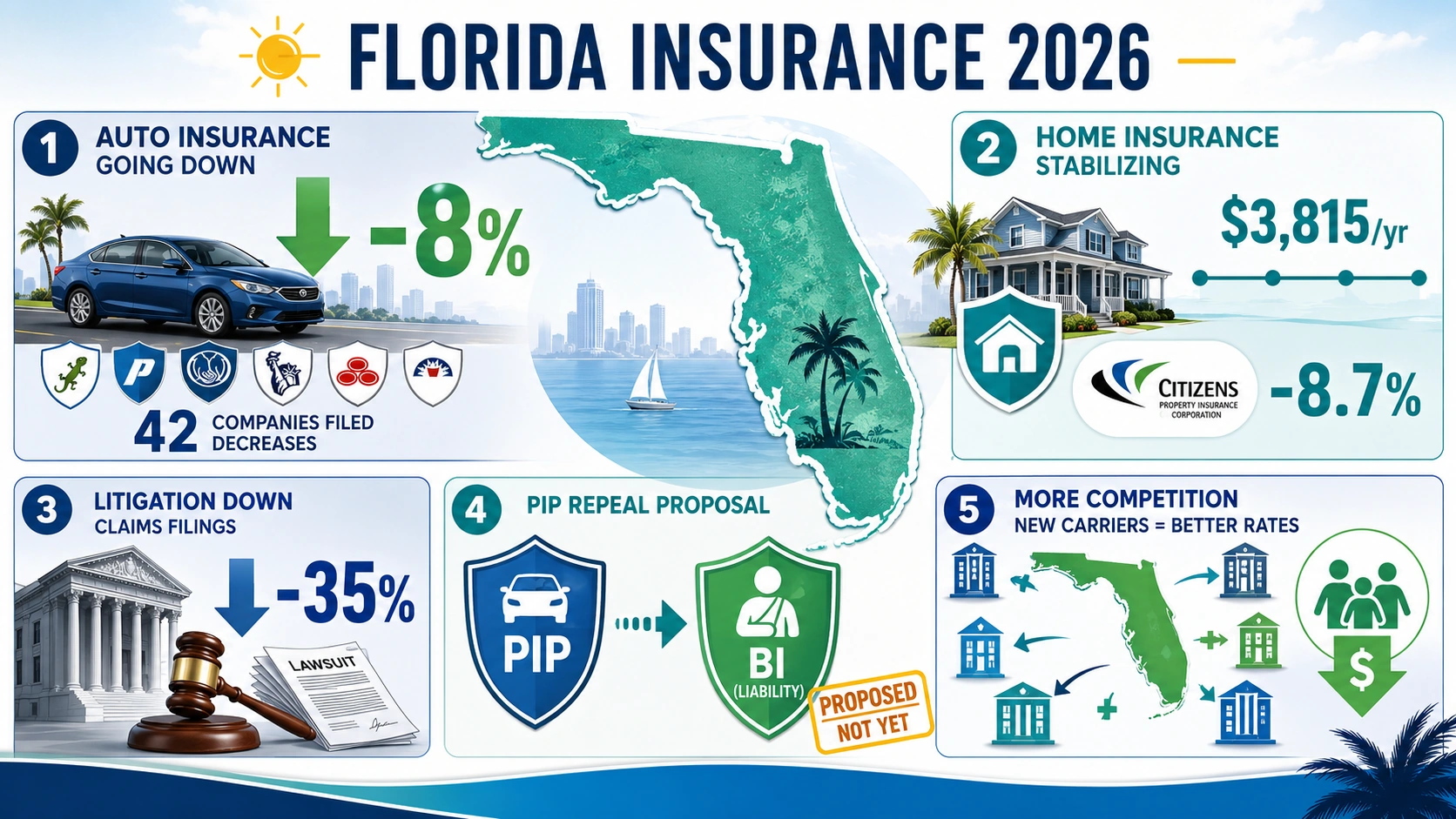
Florida regulators reported an indicated average 8% decrease for the five largest auto insurance groups in 2026. Citizens policyholders also received an approved statewide average reduction of 8.7%, although home insurance remains expensive and highly location-specific. These are meaningful changes—not a guarantee that every renewal will be lower.
Florida auto insurance rates are moving in the right direction
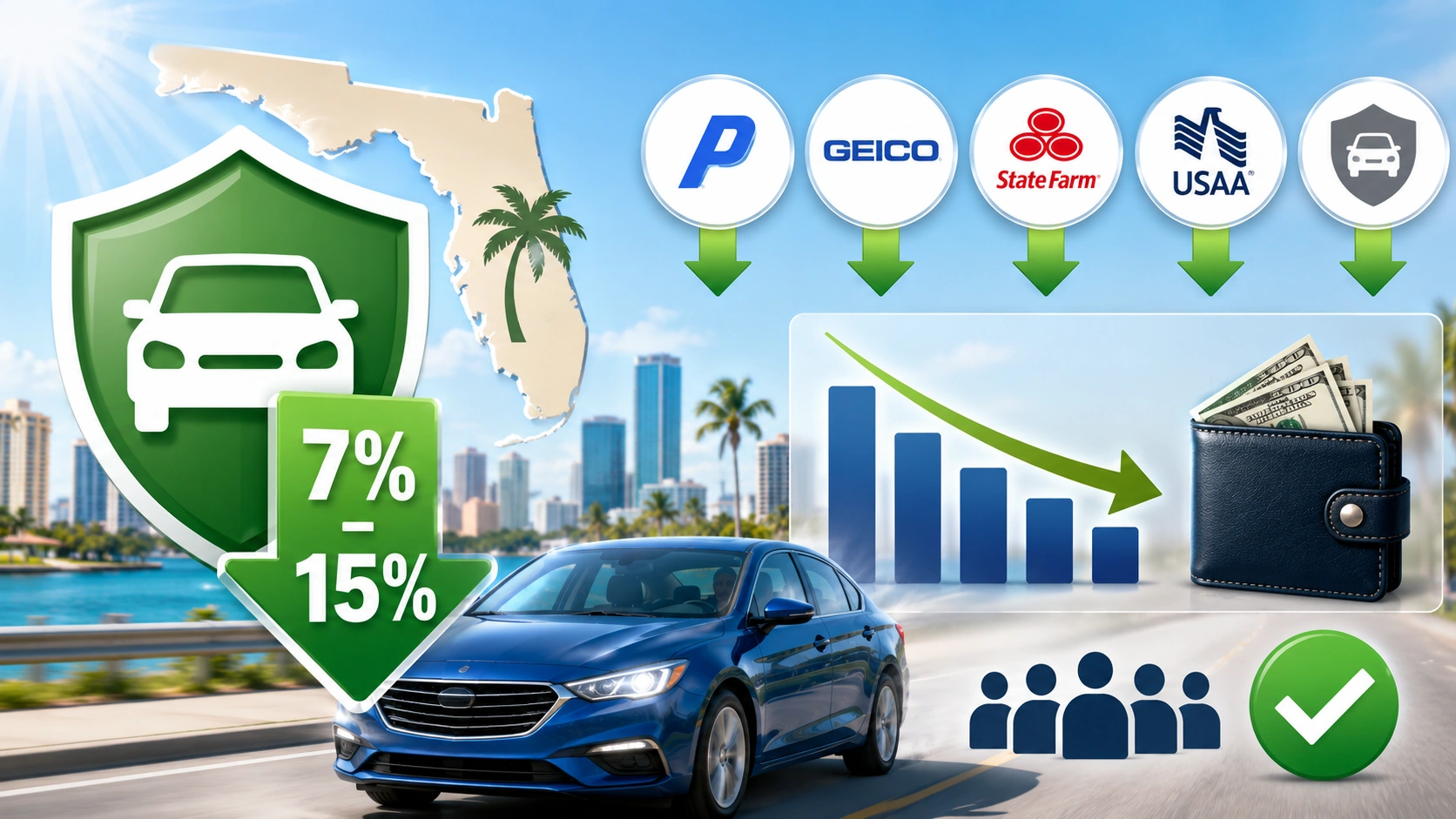
The Florida Office of Insurance Regulation says Progressive, GEICO, State Farm, Allstate and USAA represent about 78% of the state’s auto market and indicated an average rate change of minus 8% for 2026. Some carriers announced larger reductions, credits or dividends for eligible customers.
That does not mean every driver receives an 8% discount. A renewal can still rise because of a move, a new vehicle, a household driver, a ticket, a claim, changed mileage, coverage choices or local loss trends. The useful comparison is not “my premium versus the statewide headline.” It is “my current renewal versus comparable coverage from the carriers available to me.”
Learn how Florida auto insurance coverage works before comparing prices.
Home insurance is stabilizing, but Florida risk has not disappeared
Citizens’ approved 2026 rates produced an average statewide reduction of 8.7%, with more than 330,000 policyholders expected to see decreases. Private-market competition has also improved. Yet hurricanes, rebuilding costs, roof condition, flood exposure, deductibles and mitigation features still make one Florida home very different from another.
“If the market is improving, why is my home renewal still high?”
Because market direction and individual underwriting are different. Ask for a coverage-by-coverage review: dwelling limit, roof settlement method, hurricane deductible, water limitations, screened-enclosure coverage, loss assessment and flood. A cheaper policy with a new exclusion can cost much more after a claim.
Belkys helps homeowners compare available options and understand the tradeoffs in plain English or Spanish. That combines two practical advantages: access to multiple carrier options through an independent agency and local guidance built around the property—not a generic online price.
PIP was not repealed in Florida
Proposals to replace Florida’s no-fault system generated many headlines, but the 2026 repeal effort did not pass. Personal Injury Protection remains required for most Florida-registered vehicles. Drivers should not remove or ignore PIP based on outdated articles or automated search summaries.
This matters because a policy built on incorrect legal information can leave a registration problem or an unexpected protection gap. A local policy review is faster than trying to reconcile contradictory articles alone.
What to review before your next insurance renewal
- Compare equal limits and deductibles. A lower number is meaningless if the protection changed.
- Update the facts. Mileage, drivers, roof age, alarms, wind mitigation and occupancy can affect eligibility and price.
- Check for coverage gaps. Flood is generally separate from homeowners insurance, and state minimum auto coverage may not protect your income or assets.
- Start before the deadline. Waiting until the renewal date reduces the time available to correct records or obtain inspections.
Common concerns, answered
“Switching insurance is too complicated.”
An independent review can organize the comparison around your current declarations page. Belkys explains the differences and helps coordinate the change if another option makes sense.
“The cheapest quote is all I need.”
Price matters, but exclusions, deductibles, limits and claim conditions determine what the policy actually does. The goal is affordable protection, not a cheap surprise.
Sources
- Florida Office of Insurance Regulation: 2026 auto rate changes
- State of Florida: approved home and auto rate relief
- Florida Senate: SB 522 legislative status
This article is for general information only and is not legal advice or a promise of coverage or savings. Eligibility, premiums and coverage vary by carrier and applicant.